Thrive and Shine Women's Wellness
Menopause and Perimenopause: Symptoms, Changes and Physical Effects
Understanding how menopause affects the body, movement, pelvic health and overall function.
What is menopause and perimenopause?
Menopause is a natural life stage that marks the end of menstrual cycles, but symptoms often begin years before periods stop completely. This earlier phase is known as perimenopause, when hormonal fluctuations can start to affect physical, emotional, and mental wellbeing.
Stages of Menopause
Perimenopause
hormonal changes begin, symptoms may fluctuate, and cycles can become irregular. Can last 8-10 years prior to menopause.
Menopause
defined as 12 months since the last period. Average age is 51.
Post Menopause
the years following menopause, when some symptoms may settle, while others can persist or change.
Symptoms can appear at any stage and vary significantly from person to person. For many women, understanding what is happening — and how to manage symptoms — is the first step toward feeling better.
Common symptoms associated with menopause and perimenopause
There are over 30 recognised menopause-related symptoms. Some of the more common ones include:
Hot flushes and night sweats
Sleep disturbance or insomnia
Fatigue or low energy
Brain fog or difficulty concentrating
Mood changes, anxiety, or low confidence
Joint or muscle aches and stiffness
Weight changes or changes in body composition
Pelvic health symptoms, such as bladder changes or discomfort
Changes in libido or discomfort with intimacy
Increased sensitivity to stress or reduced resilience
Symptoms don’t always fit neatly into one category, and it’s common for physical, emotional, and lifestyle factors to overlap — particularly during perimenopause.

Why These Symptoms Happen
Hormonal changes during perimenopause and menopause, particularly the reduction in oestrogen, can affect how different tissues in the body function.
Oestrogen plays an important role in maintaining muscle strength, joint health, and the quality of connective tissues such as tendons and ligaments. As levels change, this can lead to a number of physical effects.
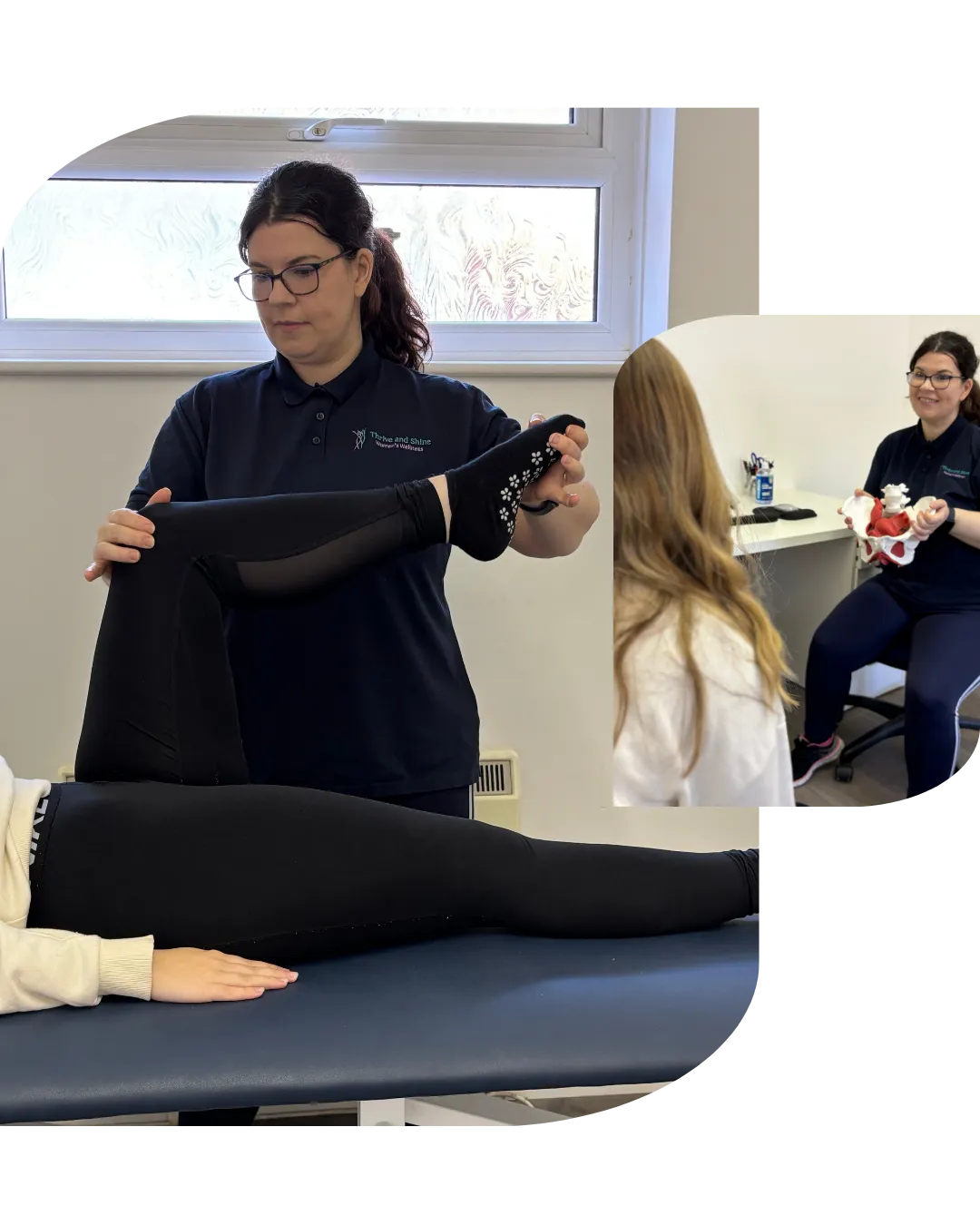
Muscle strength and mass may gradually decrease, which can affect overall strength, stability, and how the body copes with activity. This can also impact the pelvic floor.
Tendons and connective tissues may become less resilient and more sensitive to load, partly due to changes in collagen turnover and tissue elasticity.
Joint health can be affected, with some women experiencing increased stiffness or discomfort. Oestrogen also has anti-inflammatory effects, so changes in levels may influence how the body responds to irritation or strain.
Pelvic tissues may become more sensitive or less well supported, contributing to symptoms such as bladder changes, prolapse, or discomfort.
These changes can make everyday movement, exercise, and recovery feel different to before, even if nothing obvious has changed in your activity levels.
When to seek support
You may benefit from physiotherapy if you’re experiencing:
Joint pain or stiffness affecting movement or activity
Reduced strength or confidence with exercise
Pelvic health symptoms such as bladder changes, prolapse or discomfort
Pain during everyday activities or when returning to exercise
You don’t need to wait until symptoms become severe. Early assessment can help identify what’s contributing to your symptoms and support you in managing them effectively.
Physiotherapy can also support longer-term strength, mobility and confidence with movement as your body changes through menopause.
Ready to Take the Next Step?
If you’re experiencing symptoms related to perimenopause or menopause, a physiotherapy assessment can help you understand what’s happening and what may help.
Stay Connected
Join our community for women’s health tips, clinic updates, and early access to workshops and courses.
Get in Touch
Thrive and Shine Women's Wellness Studio
Corner House
Woodborough Road
Winscombe
BS25 1AQ
07862620259


Thrive and Shine Women’s Wellness provides physiotherapy for women, including support during menopause and midlife, helping with pelvic health, joint pain, stiffness and movement changes. Based in Winscombe, supporting clients across Weston-super-Mare, Cheddar, Axbridge and North Somerset.
Also offering pregnancy and postnatal support, Pilates, and remedial hypnosis (CONTROL Method).
© Copyright 2026. Thrive and Shine Women's Wellness. All rights reserved.